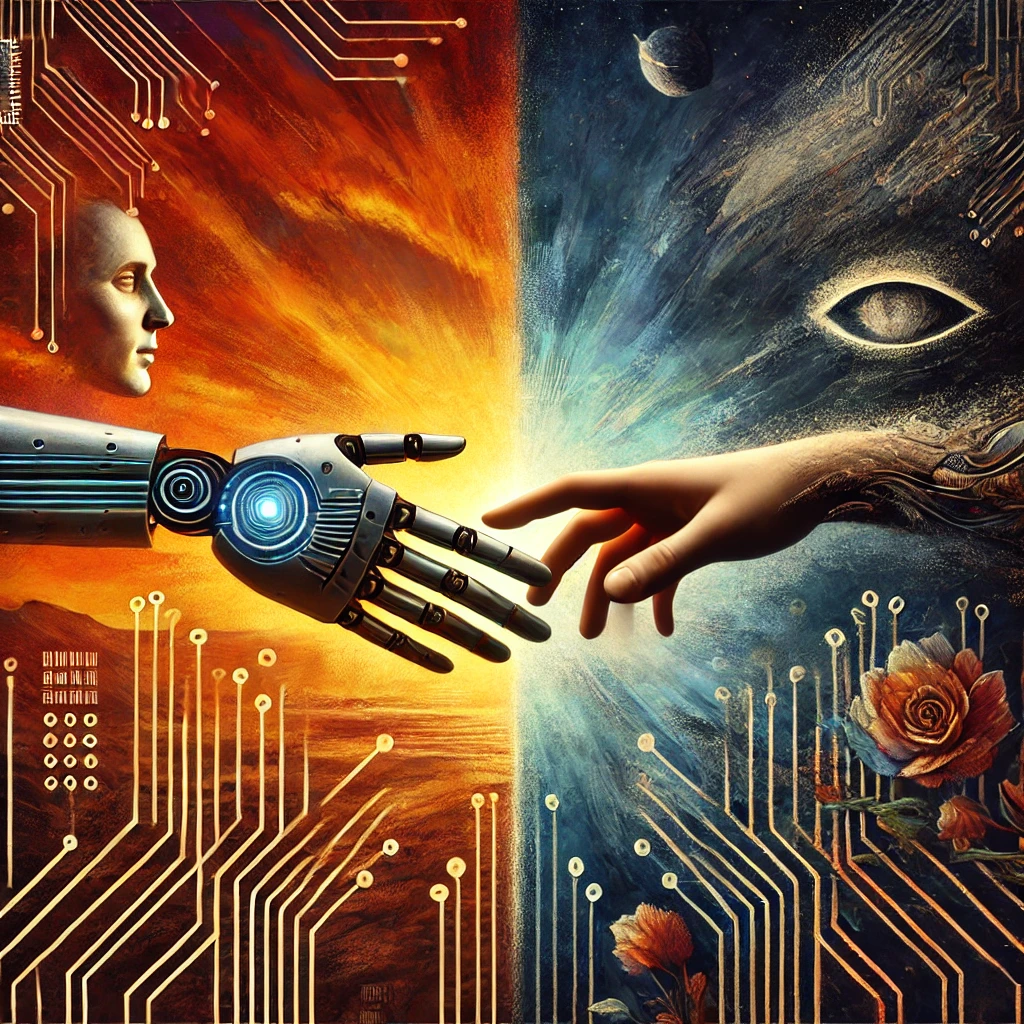
Artificial Intelligence (AI) is all the hype these days, with companies spending tens of billions of dollars to create newer and better AI systems. There’s a lot of talk about the jobs that will be lost to AI, but even before that happens, AI has a more immediate problem: people are increasingly repulsed by it.
Overwhelmed by Automation: The Annoyance of AI-Driven Marketing
As a former Chief Information Officer and current business owner, I have a lot of people trying to get my attention to sell me something. On an average day, I receive over 100 marketing emails. This is annoying but fairly harmless. However, automated marketing—driven by AI—has recently become more pernicious. AI-driven tracking combined with automated messaging allows almost anyone to create “journeys” where multiple emails are sent based on your interactions.
For example, they might send you a note asking you to attend a conference. If you open the email but don’t sign up, they send a reminder in a few days. If you don’t open the email at all, a different reminder goes out. A journey might have six or eight possible emails depending on your actions, all designed to increase engagement by tailoring the messages to your behavior.
This trend has now infiltrated LinkedIn, where I receive daily connection requests followed by an immediate message, often with a sales pitch. This is mildly annoying at first, but it escalates when the automation becomes aggressive. I once received four follow-up messages pitching something I had no interest in, even after ignoring the first one. The first message was an annoyance; by the fourth, it felt like an intrusion. Had these emails been from actual people, I might have been impressed by their persistence.
Knowing it’s just automation, I dismiss it as worthless.
Eroding Trust: The Uncanny Valley Effect in AI Communication
This is where AI begins to falter: it erodes trust. When interactions feel automated and insincere, people become skeptical and less willing to engage. In robotics there’s the concept of the “Uncanny valley” which describes the discomfort people feel when something looks almost, but not quite, human. For instance, we find stick figures or cartoon people charming, and exact replicas of humans acceptable, but inexact replicas—like human-looking androids with waxen features—evoke a sense of unease.
The uncanny valley also applies to AI-generated content. For instance, we often find children’s writing endearing, even though it’s far from perfect. But AI-generated text that’s almost human-like can feel unsettling, as if it’s trying too hard to mimic something it isn’t. This discomfort intensifies when we realize that the messages flooding our inboxes and LinkedIn feeds aren’t from real people, but from algorithms designed to manipulate our responses.
I already see this happening throughout AI. For instance, in my various experiments on my way to becoming a [makeup expert]( https://lowryonleadership.com/2024/07/09/how-i-became-a-top-reddit-makeup-contributor-despite-knowing-nothing-about-makeup-the-power-of-rag-ai/) I noticed a peculiar thing, the moment anyone realized that AI was involved attention immediately turned overwhelmingly negative. One reddit post that was obviously AI generated got down voted 37 times with 0 upvotes, which is quite the accomplishment as downvoted posts appear in people’s threads less frequently than upvoted posts.
In short, when people realized it was AI they hated it.
The Psychological Toll: Fatigue from AI Overload
As AI starts to show up everywhere, the backlash will grow. People are already beginning to feel overwhelmed by the sheer volume of automated content, leading to decision fatigue, annoyance, and a general sense of being bombarded by non-human communication. This, in turn, fuels a desire to push back against AI. We crave authenticity and genuine human interaction—things that AI, at least in its current form, cannot provide.
Conclusion: Navigating the AI Landscape
AI has the potential to revolutionize the world, but its true success will depend on finding a balance that honors its strengths with our deep-rooted need for authentic, human connections. We need more of a focus on harmony between technology and humanity.
The future of AI doesn’t have to be a cold, mechanical one. Instead, it can be a symbiotic relationship where technology complements our natural instincts and emotional intelligence. If we can strike that balance, we’ll not only avoid the pitfalls of an AI backlash but also unlock a world where technology truly enhances the best parts of what it means to be human.
If we can’t strike that balance then we will be ever more bombarded by obviously AI generated marketing. No doubt with AI automatically responding to the automatic marketing and the world’s data lines will be like the postal system is now, awash in marketing no one wants.
Leave a Reply